
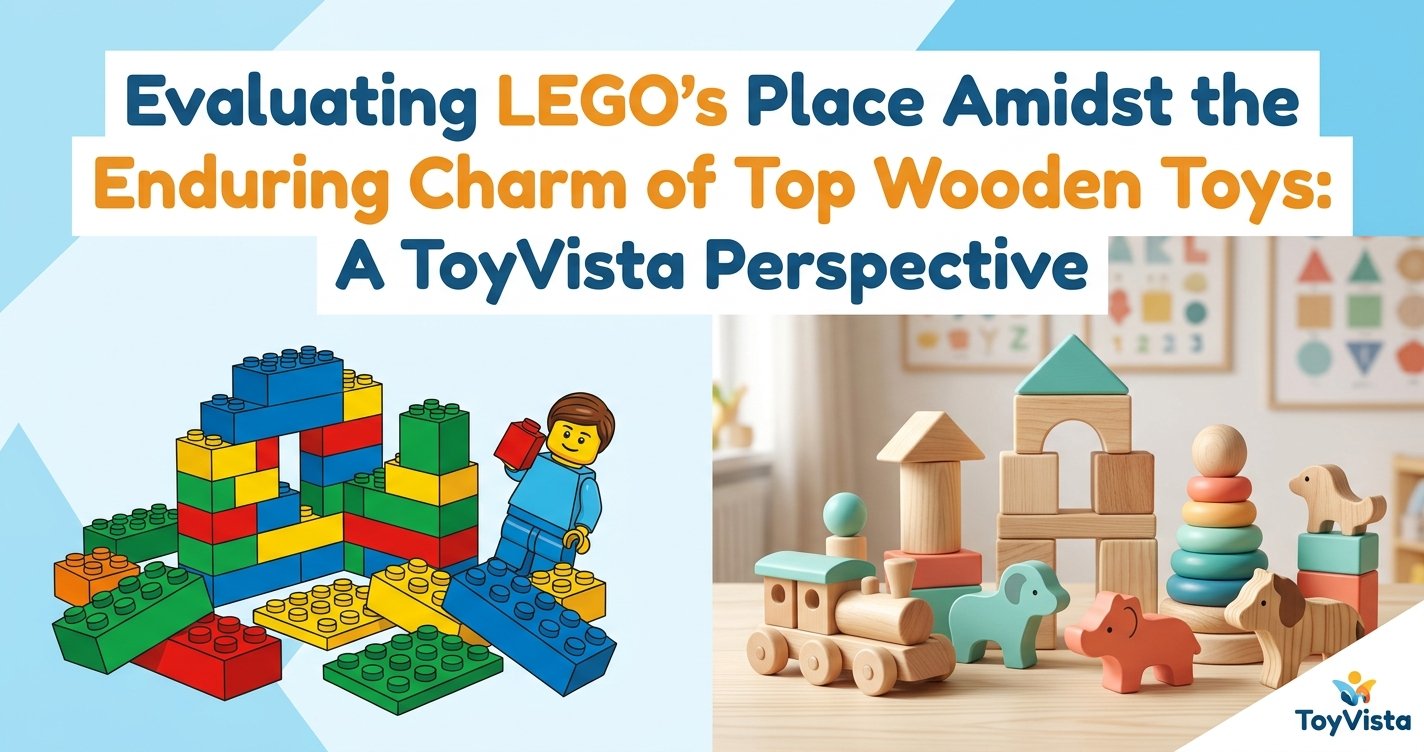
Evaluating LEGO's Place Amidst the Enduring Charm of Top Wooden Toys: A ToyVista Perspective
At ToyVista, we believe in the power of play to shape young minds, foster creativity, and ignite a lifelong love for learning. As leading experts in educational toys, we frequently encounter passionate debates among parents, educators, and even toy enthusiasts about the 'best' type of toy. One such intriguing discussion often pits the global phenomenon of LEGO against the timeless appeal of classic wooden toys.
The question isn't whether LEGO is good – its innovative impact on play is undeniable. Rather, when we evaluate the toys company LEGO on top wooden toys, we delve into how these two distinct giants of the toy world compare, complement, and sometimes contrast in their educational value, sustainability, and overall play experience. Join us as we explore the unique strengths of both, helping you make informed choices for your child's developing world.
The Unrivaled Empire of LEGO: A Foundation of Innovation and Creativity
For decades, the LEGO Group has been synonymous with creative construction. From humble beginnings in Billund, Denmark, LEGO has evolved into a global powerhouse, captivating generations with its iconic interlocking bricks. Its success isn't accidental; it's built on a foundation of ingenious design, consistent quality, and an unwavering commitment to inspiring builders of all ages.
A Legacy Forged in Plastic: LEGO's Educational Impact
LEGO bricks are more than just plastic; they are tools for imagination. Their structured, systematic nature inherently promotes a wealth of developmental skills:
- Fine Motor Skills: Manipulating small bricks and connecting them requires precision and dexterity.
- Problem-Solving: Following instructions, troubleshooting a build, or designing a new structure all hone critical thinking.
- Spatial Reasoning: Visualizing how pieces fit together and understanding three-dimensional space is fundamental to LEGO play.
- Creativity and Imagination: While sets come with instructions, the true magic of LEGO lies in the ability to deconstruct, reconstruct, and invent entirely new worlds.
- Patience and Persistence: Large builds teach children the value of sustained effort and seeing a project through to completion.
From simple DUPLO blocks for toddlers to intricate Technic sets for older children and adults, LEGO offers a progressive learning curve that grows with the child, making it a cornerstone of many educational play philosophies.
Beyond the Brick: LEGO's Diverse Play Ecosystems
LEGO has masterfully expanded beyond the basic brick, creating rich, narrative-driven play experiences. Themes like LEGO City, LEGO Friends, LEGO Star Wars, and LEGO Ninjago offer storytelling opportunities, character development, and immersive role-play. This diversification allows children to explore different interests, from urban planning to fantasy adventures, all while engaging with the core building mechanics. Their venture into digital integration, robotics, and coding kits further exemplifies their commitment to evolving with modern educational needs.
The Timeless Appeal of Wooden Toys: Simplicity, Sustainability, and Sensory Richness
In stark contrast to LEGO's meticulously engineered plastic world, wooden toys represent a return to simplicity, natural materials, and often, more open-ended play. These classic toys have adorned nurseries and playrooms for centuries, their enduring popularity a testament to their intrinsic value.
Why Wood Endures: Developmental Benefits and Durability
Wooden toys offer a unique set of benefits that complement and sometimes surpass those of their plastic counterparts:
- Sensory Experience: The natural weight, texture, and even subtle scent of wood provide a rich tactile experience that plastic often lacks. This sensory input is vital for early childhood development.
- Durability and Longevity: High-quality wooden toys are incredibly robust. They withstand years of play, often becoming cherished heirlooms passed down through generations. Scratches and dents add character, rather than detracting from their value.
- Open-Ended Play: Many wooden toys, such as blocks, stacking rings, or simple figures, do not come with prescribed instructions. This encourages children to invent their own games, narratives, and building challenges, fostering pure imaginative play.
- Aesthetic Appeal: The natural beauty of wood, often finished with non-toxic paints or clear lacquers, makes wooden toys aesthetically pleasing. They blend seamlessly into home environments, often doubling as decorative items.
- Safety: Reputable wooden toy manufacturers prioritize safety, using non-toxic finishes and ensuring smooth edges, making them a safe choice for even the youngest children.
The Sustainable Choice: Environmental Consciousness in Play
In an age where environmental concerns are paramount, wooden toys often stand out as a more sustainable option. When sourced from responsibly managed forests (FSC-certified), wood is a renewable resource. Its biodegradability at the end of its life cycle also contrasts with the long-term environmental impact of plastic. This aspect resonates strongly with eco-conscious parents looking to minimize their family's carbon footprint.
Direct Comparison: LEGO vs. Wooden Toys – A Deeper Dive
To truly evaluate the toys company LEGO on top wooden toys, we must place them side-by-side across key dimensions:
Materiality and Tactile Experience: Plastic vs. Natural Wood
LEGO's ABS plastic offers precision, vibrant colors, and consistent interlocking. It’s light, durable, and allows for intricate designs. Wooden toys, however, offer a grounded, organic feel. The weight, grain, and warmth of wood engage different sensory pathways, promoting a connection to natural materials. For some, the smooth, cool plastic is stimulating; for others, the tactile richness of wood is more soothing and engaging.
Open-Ended Play and Guided Construction
Both toy types champion open-ended play, but with different approaches. LEGO, while allowing for free-form building, often comes with detailed instructions, guiding children through complex constructions. This structured approach is excellent for developing logical sequencing and following directions. Wooden blocks or stacking toys, by contrast, are inherently instruction-free, inviting children to explore gravity, balance, and creative design purely through experimentation. This difference can cater to varying play styles and developmental stages.
Durability, Longevity, and Heirloom Potential
Both LEGO and high-quality wooden toys are built to last. LEGO bricks are incredibly resilient, resisting breakage and maintaining their interlocking ability for years. However, individual pieces can be lost. Wooden toys, especially solid blocks or figures, are often virtually indestructible under normal play conditions. Their resistance to obsolescence and their ability to acquire a beautiful patina with age often make them more likely to be kept and passed down as cherished family heirlooms.
Aesthetic and Integration with Home Environment
LEGO’s vibrant, often primary colors and detailed sets create dynamic, action-packed play areas. They are designed to stand out. Wooden toys, with their natural tones and simpler forms, tend to offer a more calming aesthetic. They often blend more harmoniously into a living room or nursery, appealing to parents who prefer a less cluttered or more natural look in their home environment.
LEGO's Evolution: Embracing New Frontiers While Respecting Classic Play Principles
While traditional wooden toys emphasize tactile simplicity, LEGO has continuously pushed the boundaries of play, integrating technology and advanced mechanics. This evolution demonstrates LEGO's commitment to staying relevant in a rapidly changing world, offering new avenues for learning and creativity that go beyond traditional brick-building.
For instance, for those looking to merge classic building with cutting-edge robotics, this top-rated robotic building kit offers an unparalleled opportunity for children to learn coding, engineering principles, and creative problem-solving. It exemplifies how LEGO combines the hands-on satisfaction of building with the intellectual challenge of programming, creating a powerful educational tool that resonates with the digital natives of today.
This expansion doesn't diminish the value of wooden toys but rather highlights how diverse play experiences contribute to a child's holistic development. LEGO's ventures into areas like robotics, coding, and augmented reality demonstrate its commitment to fostering 21st-century skills while still upholding the core principles of creative construction.
The Verdict: Complementary Play for Holistic Development
When we evaluate the toys company LEGO on top wooden toys, the conclusion isn't about declaring a single 'winner.' Instead, it's about recognizing the distinct yet complementary roles each plays in a child's development. Both LEGO and wooden toys are invaluable educational tools, each offering unique benefits that cater to different aspects of growth.
Curating a Balanced Toy Collection
A truly enriching play environment often includes a mix of both. LEGO excels in structured problem-solving, detailed world-building, and fostering an understanding of mechanics and engineering. Wooden toys shine in promoting sensory exploration, imaginative free play, and a connection to natural materials. Together, they create a well-rounded play experience that stimulates various cognitive, emotional, and physical skills.
- For Fine Motor & Structured Thinking: LEGO's intricate builds.
- For Sensory & Open-Ended Creativity: Wooden blocks, puzzles, and stacking toys.
- For Storytelling & Role-Play: Both LEGO sets with minifigures and wooden dollhouses or play kitchens.
- For Sustainability & Timelessness: High-quality wooden toys.
ToyVista's Recommendation: A Symphony of Play Possibilities
At ToyVista, our expertise in educational toys leads us to advocate for a diverse toy collection. Encourage children to engage with the precision and imaginative worlds of LEGO, challenging them with increasingly complex builds and even introducing them to the exciting realm of LEGO robotics. Simultaneously, nurture their connection to nature and their innate creativity with the simple, tactile beauty of wooden toys. This balanced approach ensures a richer, more comprehensive developmental journey.
Conclusion: Beyond the Materials, Towards Meaningful Play
In the grand tapestry of childhood play, both LEGO and top wooden toys hold esteemed positions. LEGO, with its infinite possibilities for structured creation and its foray into technological innovation, continues to inspire builders and problem-solvers. Wooden toys, with their timeless appeal, natural beauty, and emphasis on open-ended, sensory play, offer a grounding and imaginative experience that endures through generations.
Ultimately, the most valuable toys are those that engage a child's mind, spark their imagination, and encourage active, joyful learning. By understanding the unique strengths of both LEGO and wooden toys, parents and educators can curate a play environment that maximizes developmental benefits, fostering well-rounded, creative, and curious individuals. At ToyVista, we celebrate the diversity of play and the profound impact it has on the children of today, who will become the innovators of tomorrow.